RAGE VST PLUGIN
this isn't just another distortion plugin. specifically crafted for making rage/underground type beats, you get speaker knocking 808s and distortion texture in seconds.
50+ PRESETS INCLUDEDTRAPRAGE
$39.99$29.99
FREE TRIAL0:000:00
Instant Access
Direct download
100% Royalty Free
Handcrafted, always.
Flexible Payments
Cards & digital wallets
Support
Here to help
Guaranteed Safe & Secure Checkout
Feature Demos
See It In Motion
ABOUT THIS VST
Everything You Need to Know
WHAT'S INSIDE
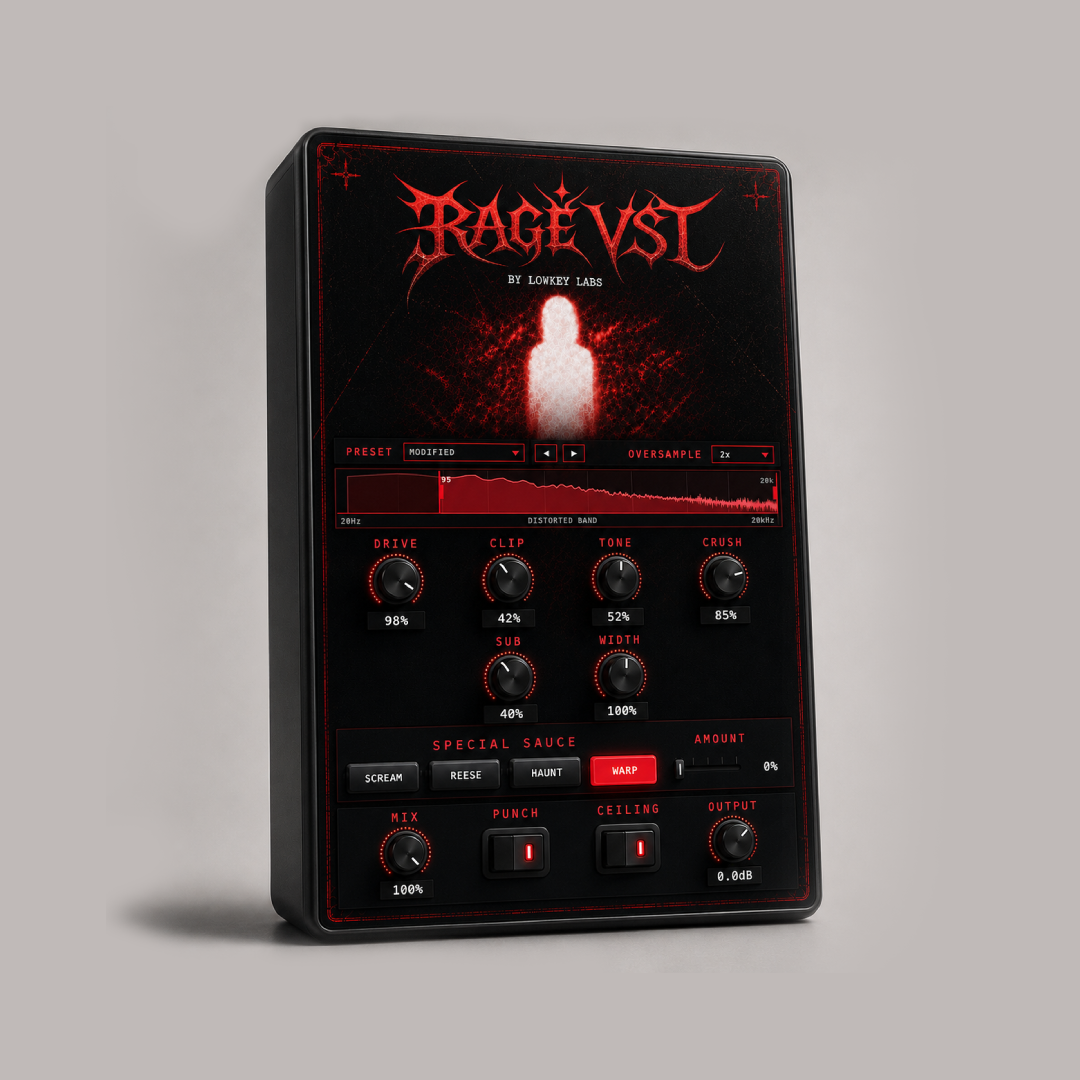
Rage VST Plugin is an 808 distortion engine that turns clean, lifeless low end into distorted, screaming, wide, aggressive audio. It is a real audio effect, not an instrument or a preset pack: it goes on an existing track, bus, or mixer insert and replaces the waveshaper into clipper into EQ into bitcrusher into sub-enhancer chain that rage producers rebuild every session, or that they can otherwise only reach through Ableton-only Max for Live racks. On top of that it comes with 51 presets across seven banks, so you can have placement-ready distortion/texture before ever touching a knob.

WHO IS THIS VST FOR
Made for producers working in rage, hyperpop, jerk, trap, sexy drill and underground rap — anything built on an 808 that has to cut through. It is for people who want bass that distorts, screams and takes up space without the sub disappearing or the mix turning to mud. It works on 808s, bass lines, sub layers, kicks, drum busses and full beat busses, and it will happily wreck a melody loop or a vocal if that is what you are after.
WHAT'S INCLUDED IN THE VST
- 8 sound-shaping controls for drive, clipping, crunch, tone, sub, width, punch and output.
- Special Sauce with four note-aware effects: Scream, Reese, Haunt and Warp.
- Frequency Range control so you can choose exactly which part of the 808 gets processed.
- 51 presets covering 808s, bass, drums, melodies, vocals, FX and mixing.
- Oversampling up to 8x for cleaner, more detailed processing.
- Stereo widening that creates real width while staying mono-compatible.
- Built-in spectrum display to help you see what’s happening to your sound.
- Save your own presets in a dedicated user bank.
- Formats: VST3, AU and standalone on macOS; VST3 and standalone on Windows.
- Universal Windows & Mac build supporting both Apple Silicon and Intel.
HOW TO USE THE RAGE VST PLUGIN
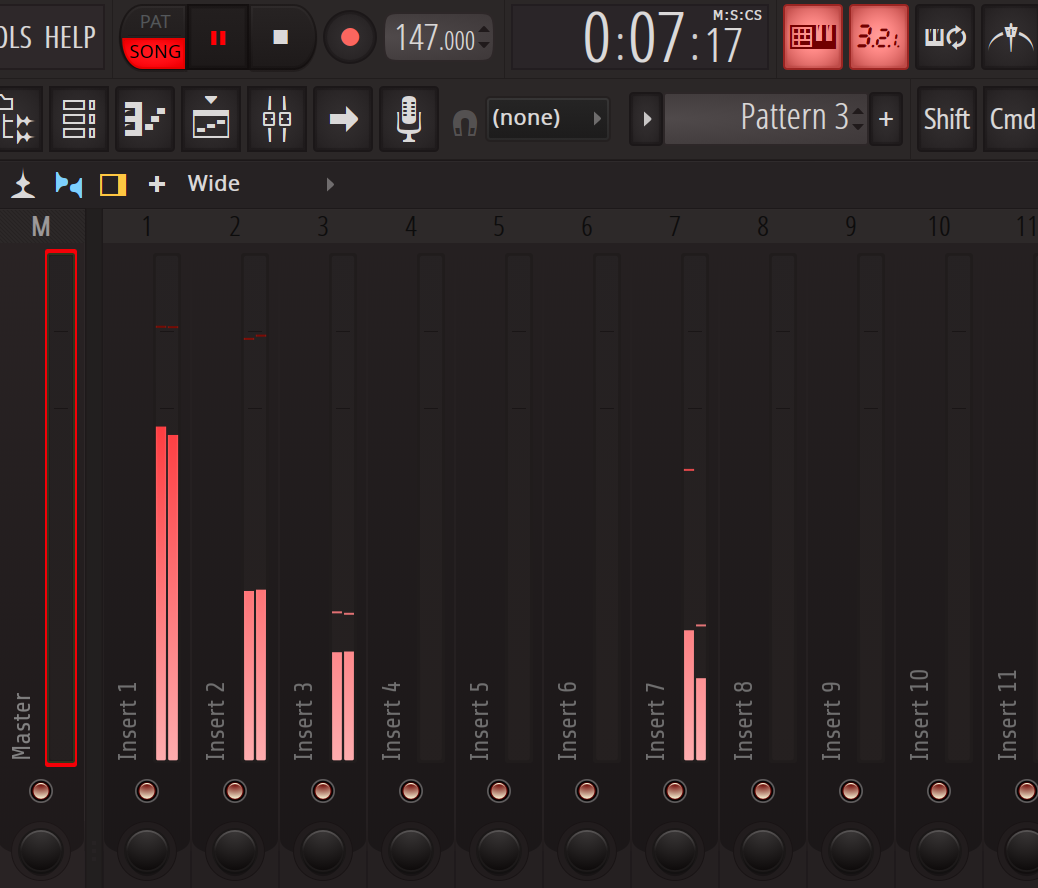
Install Rage VST, then rescan plugins in your DAW. Once loaded, drop it on an 808, bass track, or low-end bus.
Start with a preset and tweak from there:
- 808 & Bass: core low-end sounds
- Drums: drums and busses
- Mix Tools: quick mixing fixes
Then shape the sound with the controls:
- Drive & Clip: add weight, punch and aggression
- Crush: add grit and digital character
- Tone & Sub: balance bite and low-end presence
- Width: make your 808 bigger and wider
- Punch: bring back attack after heavy processing
Pro tips: Raise the low-band handle to around 70 Hz to destroy the upper 808 while keeping the sub clean. This gives you an aggressive sound that still translates on smaller speakers. Use Mix to blend with the original, and add Special Sauce for extra character. For creative effects, automate the band controls or Special Sauce to create movement and transitions.
GOOD TO KNOW
Frequently Asked Questions
What formats are included?
VST products include the plugin formats shown on the product page. When both platforms are available, your download page separates the files into Windows and Mac folders.
What DAWs do the VSTs work with?
They work in DAWs that support the included plugin formats, including FL Studio, Ableton, Logic, Studio One, Cubase, and other modern hosts.
How do I install the plugin?
Download the files, choose the Windows or Mac folder, install or place the plugin in the proper plugin folder, then rescan plugins inside your DAW.
What if the VST does not show up in my DAW?
Make sure your DAW is scanning the correct VST3 or Audio Unit folder, then run a full plugin rescan. Some DAWs cache plugin lists until you force a rescan.
Can I use the sounds I make commercially?
Yes. Music you create with the VST is yours to release commercially. The plugin itself, presets, installers, and raw included files cannot be shared or resold.